Unit 1 & 2, Grantham, NG31 9ST

Penetrating damp is caused by water entering through the external fabric of a building. Getting the diagnosis right is the only way to fix it properly. We identify the source of water ingress and resolve it at root cause - not just the internal symptom.
Tell us what's happening and we'll get back to you quickly with honest advice and a no-obligation quote. Prefer to talk? Call 01780 410378.
Penetrating damp is one of the most misdiagnosed problems in building remediation. It shows up as a wet patch on a wall or ceiling and too often gets painted over, re-plastered, or treated with a surface waterproofer that masks the problem for a few months before the water finds its way through again.
The reason these surface fixes fail is straightforward: the water has a source, and until that source is dealt with, it will keep coming in. The source might be failed pointing between courses of brickwork. It might be a cracked render coat, a leaking gutter, a defective window seal, or a problem with the roof covering above. Each of these requires a different solution, and none of them can be addressed from the inside.
At Dower, our surveyors are trained to trace the path of water ingress from the internal symptom back to the external cause. We use moisture meters, thermal imaging where needed, and a systematic inspection of the building fabric to build a clear picture of what's happening. Only then do we specify a remedial programme that will actually last.
The East Midlands has a wide variety of building stock - Georgian stone terraces in Stamford, Victorian brick in Lincoln and Grantham, post-war render-clad housing across the towns and villages, and a significant number of older rural properties built from local stone with lime mortar. All of them are susceptible to penetrating damp in different ways.
Failed or eroded pointing is perhaps the most common cause we encounter. As lime and sand mortars age, they become porous, crack or fall out entirely. Water enters the gaps between bricks or stones and saturates the wall thickness. In driving rain conditions this can cause significant ingress in a very short time.
Cracked or poorly applied render is equally problematic. When render cracks, it channels water behind the coating rather than shedding it, and the wall behind becomes saturated. Cement-heavy renders applied to older buildings are particularly prone to this because they are too rigid for the substrate beneath them.
Roof and flashing defects - including slipped or cracked tiles, failing lead flashings around chimneys and dormers, and deteriorated felt underlays - allow water to penetrate at the highest point of the building and track down through the structure before appearing as a damp patch on a ceiling or upper-floor wall.
Leaking or blocked gutters and downpipes are a leading cause of penetrating damp at high level on external walls. Overflowing gutters saturate the masonry directly below and can cause damp patches internally that are easily confused with roof defects. Regular inspection and maintenance of rainwater goods prevents many of the cases we are called to investigate.
Failed window and door seals allow water to track around the frame and into the surrounding masonry or timber. This is common in older windows where mastic pointing has dried, cracked and detached, and in newer double-glazed units where the seal between the frame and the reveal has failed.
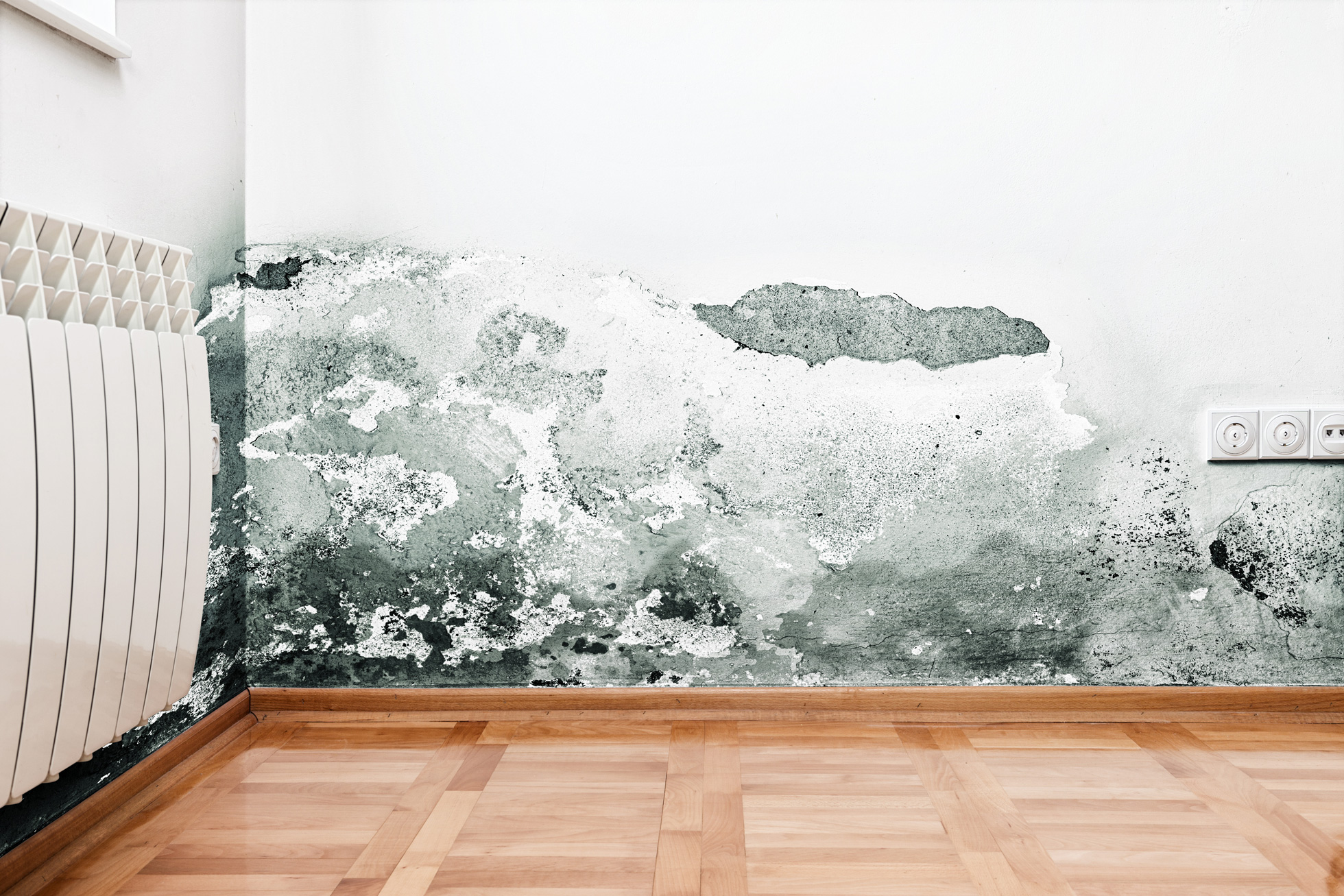
Penetrating damp tends to follow a recognisable pattern. Knowing what to look for helps you act before the damage escalates.
A patch on an internal wall or ceiling that appears or grows worse during and after periods of rainfall is a strong indicator of penetrating damp. Unlike rising damp, which is constant, penetrating damp often worsens with wet weather and may partially dry out during dry spells.
White crystalline deposits on walls - known as efflorescence - indicate that moisture has been moving through the masonry and depositing soluble salts on the surface as it evaporates. Horizontal tide marks at varying heights can indicate the extent of water movement through the wall.
Wallpaper lifting at the seams, paint bubbling or peeling, and plaster that sounds hollow when tapped all suggest that moisture has been saturating the substrate behind. These symptoms often appear some distance from the actual entry point as water tracks through the structure.
Persistent mould growth and a musty smell in a room with an external wall - particularly on or near chimney breasts, window reveals, and external corners - can indicate penetrating damp rather than condensation. A professional survey will distinguish between the two and identify the correct solution.
Our process begins with a thorough site survey. We inspect both the exterior and interior of the affected areas, using calibrated moisture meters to map the extent and depth of moisture in the wall fabric. Where the source is not immediately apparent, we use additional diagnostic tools including thermal imaging cameras to identify cold bridges and water tracking paths.
We then produce a written diagnostic report with photographs, moisture readings, and a clear description of the identified cause or causes. Not all penetrating damp has a single source - an older property may have multiple contributing defects that need to be addressed together. Our report specifies each remedial action required, with full costings, so you can make an informed decision.
The remedial works themselves vary depending on what we find. A repointing job will use an appropriate lime or hydraulic lime mortar matched to the original, applied in a way that maintains the breathability of the wall. Render repairs will address the root cause of cracking and use a compatible render specification. Gutter and downpipe repairs are straightforward but often overlooked. Internal reinstatement - new plaster, decoration, or any other finishing work - is carried out after all external works are complete and the wall has been given adequate time to dry.
All penetrating damp treatment works carried out by Dower are backed by our comprehensive 20-year guarantee.

Penetrating damp is water that enters a building horizontally through the external fabric - through walls, around windows, through roofs or via faulty guttering. Unlike rising damp, it is not drawn upward by capillary action. It typically appears as damp patches on walls or ceilings that worsen during or after rain.
The most reliable sign is a damp patch on an internal wall or ceiling that appears or worsens after rainfall. You might also notice peeling paint or wallpaper, salt staining, a musty smell, or visible mould. The pattern tends to follow water's path from the point of entry. A proper survey will confirm the diagnosis and identify the source.
Common causes include failed or missing pointing between masonry, cracked or spalled render, defective roof coverings, leaking or blocked gutters and downpipes, failed window or door seals, and cracked lintels. Identifying the precise entry point is essential - treating the internal symptoms without addressing the external cause will always fail in the long run.
Yes, in most cases. Because penetrating damp has a definable external source, a correct diagnosis followed by proper remediation of that source will resolve the problem. We back all our penetrating damp treatments with a 20-year guarantee. The key is getting the diagnosis right first time.
This depends on your policy and the cause of the water ingress. Sudden storm damage may be covered, but gradual deterioration of pointing, render, or gutters is generally considered a maintenance issue and is not typically covered. We can provide a detailed diagnostic report with photographs to support any insurance claim if required.
It depends on the extent of the defects. A straightforward repointing job to a small section of external wall may take a day or two. More extensive works involving render repair, gutter replacement, and internal reinstatement can take longer. We'll give you a clear programme during the quotation stage so you know exactly what to expect.
External wall work is priced by the length treated and the method used. External damp proofing is commonly around £125 per metre, plus any repointing or render repair the wall needs. Height and access affect the cost too, so we take a look and recommend the most sensible approach for your property before quoting.
In some cases, yes. External work such as repointing, render repair and other external wall treatments is used where the problem is penetrating damp coming through the outside wall. For rising damp the damp proof course is usually injected into the mortar from inside, but we recommend whichever approach suits your property after a survey.
Penetrating damp is usually cheaper to fix than rising damp because you are repairing the defect letting water in, such as guttering, pointing or render, rather than treating a whole wall. Simple repairs can be a few hundred pounds, while re-rendering or a water-repellent facade treatment costs more. We find the source at survey and quote for the repair and any making good.
Book a diagnostic survey and we'll give you a clear, honest picture of where the water is getting in and exactly what needs to be done to stop it. No pressure, no obligation - just straight answers from people who've been doing this for over 50 years.

Select the concern that best describes your situation.
This helps us prepare for your survey.
We'll use these to arrange your survey and nothing else.
We've received your booking request and will be in touch within 24 hours to confirm your survey.
Or call us now: 01780 410378