Unit 1 & 2, Grantham, NG31 9ST

Black mould and condensation are symptoms of a moisture problem, not a decorating problem. We diagnose the root cause - whether poor ventilation, thermal bridging, or occupant lifestyle factors - and provide lasting solutions that actually work.
Tell us what's happening and we'll get back to you quickly with honest advice and a no-obligation quote. Prefer to talk? Call 01780 410378.
Condensation is by far the most common form of dampness in UK homes, and it is also the most misunderstood. It gets painted over with anti-mould paint. The affected plaster gets replaced. The room gets redecorated. And within a season, the mould is back - often worse than before.
The reason these short-term fixes fail is that they treat the surface symptom without addressing the underlying cause. Condensation forms when warm, moisture-laden air comes into contact with a cold surface and the water vapour drops out as liquid. The conditions that allow this to happen - high indoor humidity, inadequate ventilation, cold surfaces created by thermal bridges - must be controlled if the problem is to be resolved permanently.
At Dower, we carry out a proper condensation survey before recommending any solution. We measure indoor humidity levels, assess the ventilation provision in the property, use thermal imaging to identify cold spots and thermal bridges, and review the building fabric and occupancy patterns to build a complete picture. The specification that follows is based on evidence, not guesswork, and is tailored to your specific property.
Every household generates moisture. Cooking, bathing, breathing, drying clothes indoors - a typical family of four can produce up to 12 litres of water vapour per day. When that moisture cannot escape the building, it accumulates and eventually reaches the dew point on the coldest surfaces in the room.
Poor ventilation is the most significant contributing factor in the vast majority of condensation cases we survey. Modern draught-proofing and double glazing, combined with occupants keeping windows closed for warmth and comfort, has dramatically reduced natural air changes in UK homes. Without adequate ventilation, moisture levels build up and condensation becomes inevitable.
Thermal bridging occurs where there is a break or weakness in the insulation layer of the building fabric - around window reveals, at floor-to-wall junctions, at steel lintels, and at the corners of rooms. These areas are colder than surrounding surfaces, and moisture will preferentially condense on them. Black mould on the wall near a window or in the corner of a bedroom is almost always associated with a thermal bridge.
Lifestyle factors - including how a property is heated (intermittent heating creates more condensation than background heating), whether windows are opened for ventilation, and how much moisture-generating activity takes place in poorly ventilated rooms - all contribute to the severity of the problem. We assess these as part of every survey, without judgement, because understanding them is essential to specifying the right solution.
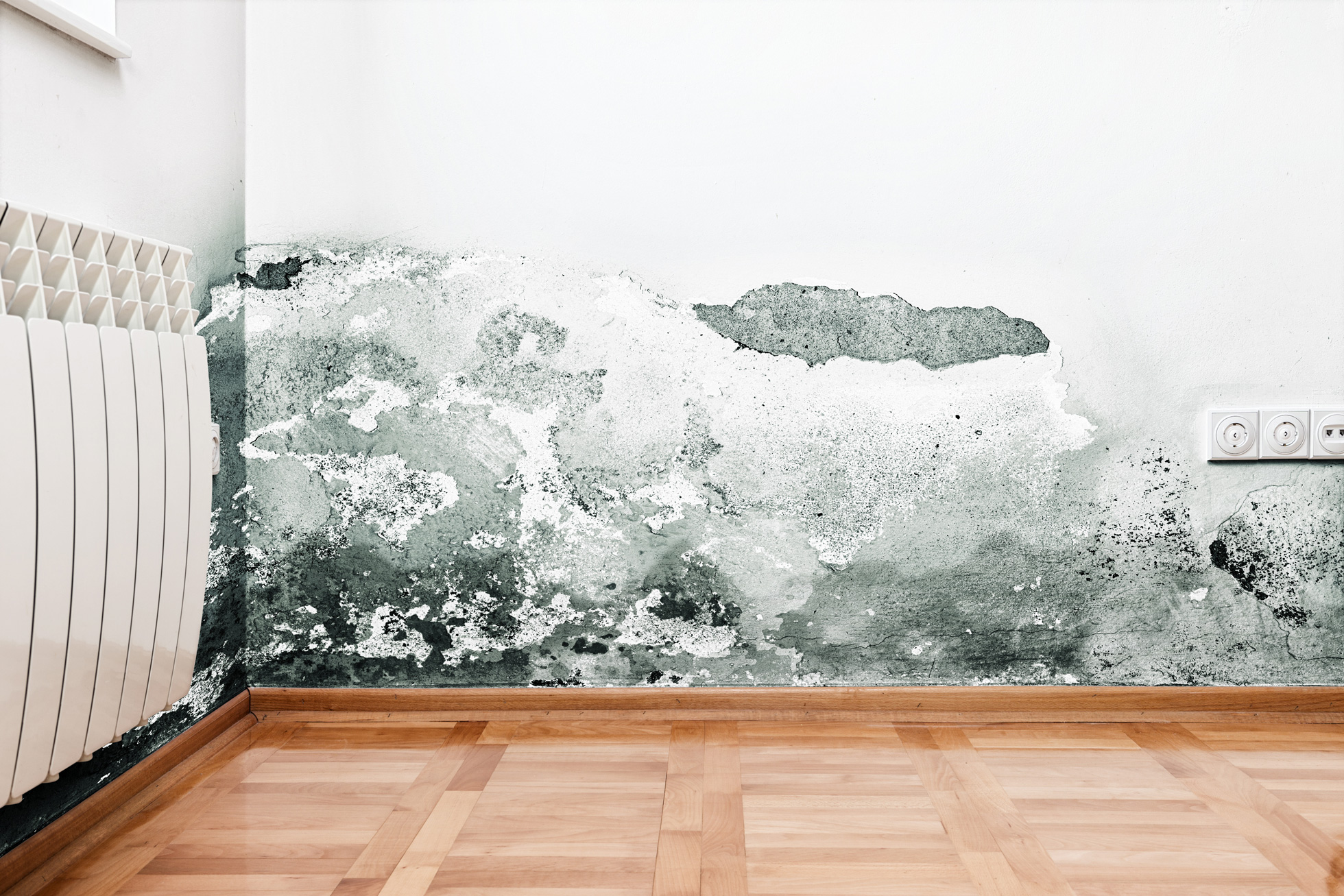
Condensation causes a distinctive and recognisable pattern of damage. Here's what to look for.
Patches of black or dark grey mould - particularly in the corners of rooms, behind furniture, around window reveals, and on north-facing walls - are the most visible sign of a condensation problem. Condensation mould is almost always associated with cold surfaces and inadequate ventilation.
Water running down the inside of windows on cold mornings is a clear indicator that indoor humidity levels are too high. While some window condensation is normal in cold snaps, persistent or heavy condensation points to a ventilation deficiency that needs to be addressed.
A persistent musty or stale odour - particularly noticeable when entering a room that has been closed up - indicates mould growth, elevated humidity, or both. Often the mould is behind furniture or wallpaper where it is not immediately visible, but it will be damaging the wall substrate and affecting the air quality of the room.
Wallpaper that is lifting at the seams or peeling away from the wall, and localised damp patches that appear most prominently in cold weather, can both indicate that moisture is condensing on the wall surface and saturating the paper or plaster behind it.
After completing our diagnostic survey, we specify a remedial programme matched to the specific causes identified in your property. In most cases this involves a combination of measures, because condensation is rarely caused by a single factor.
Positive Input Ventilation (PIV) is our most commonly specified solution for whole-house condensation problems. A PIV unit - typically installed in the loft space - continuously introduces fresh, filtered air into the home at a low flow rate, diluting the moist indoor air and pushing it out through natural leakage paths. Modern PIV units are quiet, energy-efficient, and highly effective when properly sized for the property. They operate without the occupant needing to do anything different in their daily routine.
Mechanical extract ventilation (MEV) is recommended in rooms where moisture is generated intensively - bathrooms, kitchens, and utility rooms. Continuous-running extract fans set at a background rate, boosting automatically when humidity rises, prevent moisture from accumulating at source and reduce the load on the whole-house ventilation system.
Thermal bridging remediation addresses the cold spots that allow condensation to form preferentially at specific locations. Depending on the nature of the bridge, solutions may include insulated dry-lining systems, insulated plaster boards, or targeted application of insulating render. We specify products appropriate to the substrate and occupancy, avoiding the creation of new problems in the process of solving existing ones.
Internal reinstatement - removal of mould-contaminated plaster, application of appropriate mould treatments, replastering and redecoration - is carried out as the final stage once the underlying conditions have been corrected.
All condensation control installations are backed by our comprehensive 20-year guarantee.

Condensation occurs when warm, moist air meets a cold surface and the moisture in the air drops out as liquid water. The root causes are typically a combination of high indoor humidity from everyday activities (cooking, bathing, drying laundry), poor ventilation that traps moist air indoors, and thermal bridges in the building fabric where surface temperatures drop low enough to cause condensation.
Black mould can pose health risks, particularly for people with respiratory conditions, allergies, or weakened immune systems. Regular exposure can cause coughing, wheezing, nasal irritation and worsening of asthma. Children, the elderly, and those with existing health conditions are most vulnerable. Treating the underlying condensation problem is the only permanent way to eliminate the mould.
See what a PIV unit is and how it works on our PIV units page.
See the full answer on our PIV units page.
Anti-mould paint and bleach solutions can temporarily remove surface mould, but they do not address the underlying cause. If the conditions that allowed the mould to grow are still present, it will return - often more aggressively. The only way to permanently eliminate condensation mould is to control the moisture conditions in the property. That is what we specialise in.
The two conditions present differently but are often confused. Condensation typically causes surface mould, streaming windows, and affects cold surfaces throughout the property regardless of floor level. Rising damp is more likely to cause tide marks at a consistent height on ground-floor walls, salt crystallisation on masonry, and damage to lower sections of plaster. A professional survey using moisture meters and thermal imaging will give you a definitive answer rather than a guess.
Black mould is nearly always a sign of condensation or damp, so there are two jobs to do: clean off the mould with a proper fungicidal wash rather than just bleach, then fix the moisture and ventilation problem that is feeding it. Wipe it away without dealing with the cause and it will simply come back, which is why we focus on the underlying condensation.
Black mould grows wherever there is lasting moisture, most often where condensation settles on cold walls, around windows and in rooms that are not well ventilated. Now and then it is linked to penetrating or rising damp instead, so working out where the moisture is really coming from is the first step to getting rid of it for good.
The only reliable way to stop mould returning is to remove the moisture it feeds on. That means improving ventilation with extractor fans or a PIV unit, keeping the home warm and evenly aired, and fixing any rising or penetrating damp. Cleaning the mould alone will not keep it away while the damp conditions remain.
Window condensation happens when warm, moist indoor air meets the cold glass and the moisture turns back into water. It is very common in kitchens, bathrooms and bedrooms and points to too much moisture and not enough ventilation. Extractor fans, trickle vents and steady heating help, and a PIV unit is a good long-term fix for the whole house.
A dehumidifier can take the edge off condensation by pulling moisture out of the air, so it is a useful short-term aid in a problem room. It does not fix the underlying cause though, which is usually poor ventilation, so for a lasting solution we would look at extraction or a PIV system that keeps the whole home drier.
Condensation becomes likely once indoor relative humidity rises above roughly 60 to 70 percent, especially on cold surfaces like windows and external walls. Keeping humidity down with good ventilation, extractor fans and steady heating is the key to preventing it, and a PIV unit does this automatically across the whole house.
Book a diagnostic survey and we'll give you a clear, honest picture of why condensation is forming in your property and exactly what needs to be done to control it permanently. No pressure, no obligation - just straight answers from people who've been doing this for over 50 years.

Select the concern that best describes your situation.
This helps us prepare for your survey.
We'll use these to arrange your survey and nothing else.
We've received your booking request and will be in touch within 24 hours to confirm your survey.
Or call us now: 01780 410378